Counting combinations
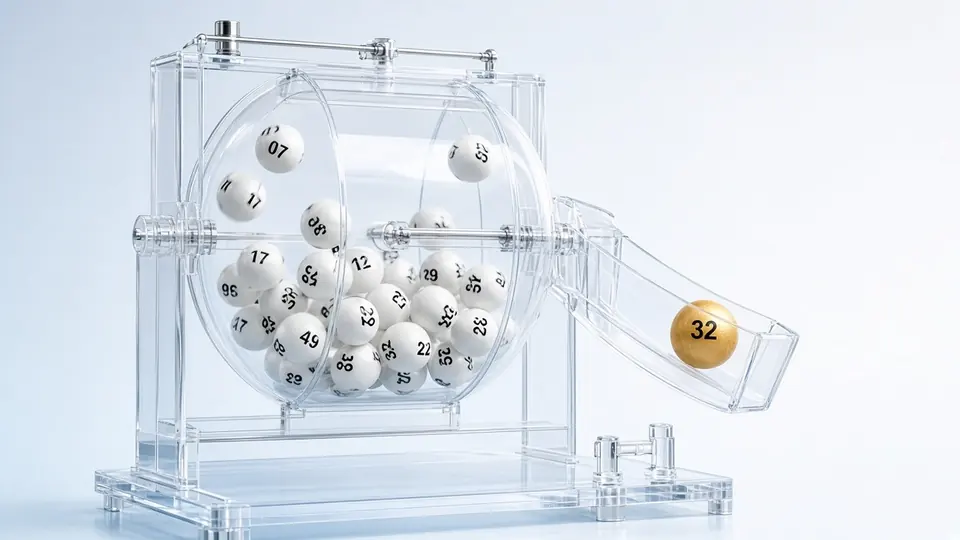
A lottery of the "pick numbers" kind asks you to choose some numbers from a larger set. The order does not matter, so the number of possible tickets is a combination, written "n choose k". It is calculated as
n! / (k! × (n − k)!)
where n! means n × (n − 1) × ... × 1. You do not need to do this by hand: any spreadsheet has a COMBIN function. What matters is the result.
Three worked examples
Choose 7 from 40
The number of combinations is 18,643,560. If every combination is equally likely, the chance that your ticket matches all seven is 1 in 18,643,560, about 0.0000054%.
Choose 6 from 49
This classic format has 13,983,816 combinations, so the chance of matching all six is 1 in 13,983,816.
Five from 50 plus two from 12
The Eurojackpot format asks for five main numbers from 50 and two extra numbers from 12. The ways to choose five from 50 is 2,118,760, and the ways to choose two from 12 is 66. Multiplying gives 2,118,760 × 66 = 139,838,160. The chance of the jackpot is therefore 1 in 139,838,160. The game's organisers publish its format and prize tiers; this is our own calculation from that published format.
Making the numbers feel real
Large numbers are hard to picture, so use time. If you bought one ticket a week in the 7-from-40 game, you would expect to need 18,643,560 / 52, about 358,530 years, to match all seven numbers once on average. One ticket a week in the 5-from-50 plus 2-from-12 format would take about 2.7 million years on average. These are averages, not guarantees. A jackpot could be won in the first week, but the chance is the same small number each time.
Buying more tickets raises the chance only in proportion. Ten different tickets in the 7-from-40 draw give 10 chances in 18,643,560, still about 0.00005%.
Most of the prizes are small
In the 7-from-40 example, the number of tickets that match exactly k of the seven drawn numbers is:
| Matches | Combinations | Chance |
|---|---|---|
| 7 | 1 | 1 in 18,643,560 |
| 6 | 231 | 1 in 80,708 |
| 5 | 11,088 | 1 in 1,681 |
| 4 | 190,960 | 1 in 98 |
| 3 | 1,432,200 | 1 in 13 |
So the chance of matching at least three numbers is about 1 in 11 (1 in 11.4), and matching five or more is about 1 in 1,650. The numbers are calculated with the same combination method: choose k of the seven winning numbers and 7 − k of the 33 losing ones. A ticket that matches two or fewer numbers, which is most tickets, wins nothing in this simple illustration. Real games set their own prize tiers, so check the published rules for the game you are looking at.
Does a lottery have a house edge?
Yes, in the sense described in the house edge guide. A lottery collects participation fees and pays part of them back as winnings. The rest covers costs, taxes and returns to the beneficiaries. For games run under an exclusive licence, the Gambling Act says the Government sets by decree the proportion of participation fees that must be paid out as winnings (section 31). So the expected return on a ticket is below the price of the ticket.
Because of this, a lottery ticket has a negative expected value, even if a jackpot has rolled over many times. A bigger jackpot raises the chance of a big win only if the odds change, which they do not. It also raises the number of tickets sold, and with more tickets, more people may share the jackpot.
Common mistakes
- "Pick unusual numbers, it improves your chances." Every combination has the same chance. Unusual choices can reduce the chance of sharing the prize, but they do not raise the chance of winning.
- "Numbers that have not come up are due." Draws are independent, so a number has the same chance each time.
- "A system or a syndicate guarantees a win." A syndicate (a group buying together) raises the number of tickets and divides any prize. It does not change the odds per ticket.
- "It is only a small amount." Small amounts are the point of the design: frequent small bets add up. Count the total spent over a year.
What the law says about information
A licensed operator must make the probability of winning available to players (section 37 of the Gambling Act). Lottery tickets must show information on how the lottery works, who runs it and the number, value and type of winnings. If you cannot find the odds for a lottery game, do not play it until you can.
If lottery spending feels hard to control
Lotteries are often seen as harmless, but the Finnish gambling-harm services deal with all forms of gambling, including lottery-type games. The warning signs in this guide apply here too, and Peluuri can help.
Quick answers
What is the chance of winning a 6-from-49 lottery jackpot?
1 in 13,983,816.
Does picking birthdays reduce my chance?
No. Each combination has the same chance of being drawn. Birthdays only make it more likely that others pick the same numbers.
Is buying more tickets a good strategy?
It raises the chance of winning in proportion to the number of tickets, but the chance stays very small, and the total spend rises in the same proportion.
Sources
The numbers on this page are our own arithmetic from the stated rules. They describe long-run averages, not what will happen in any single session. Nothing here is a betting tip or an encouragement to gamble.